
Hannah said it like she was reading off a calendar reminder, not like she was speaking to someone who had held her children as newborns and stood at their stove on Thanksgiving when the gravy wouldn’t thicken.
“We’re doing Christmas at my mom’s,” she told me. “You can stay home.”
Her eyes didn’t flicker. Her voice didn’t soften. She didn’t add the little sentence people tack on when they want to sound kind without actually being kind. She stood in my doorway with her perfect hair and her clean winter coat, and she looked through me like I was a chair she’d decided to move into the garage.
For a second, my kitchen felt too bright. The lights above the sink hummed, the coffeemaker clicked, and the little Santa magnet on my refrigerator smiled like he didn’t know what it cost to keep smiling.
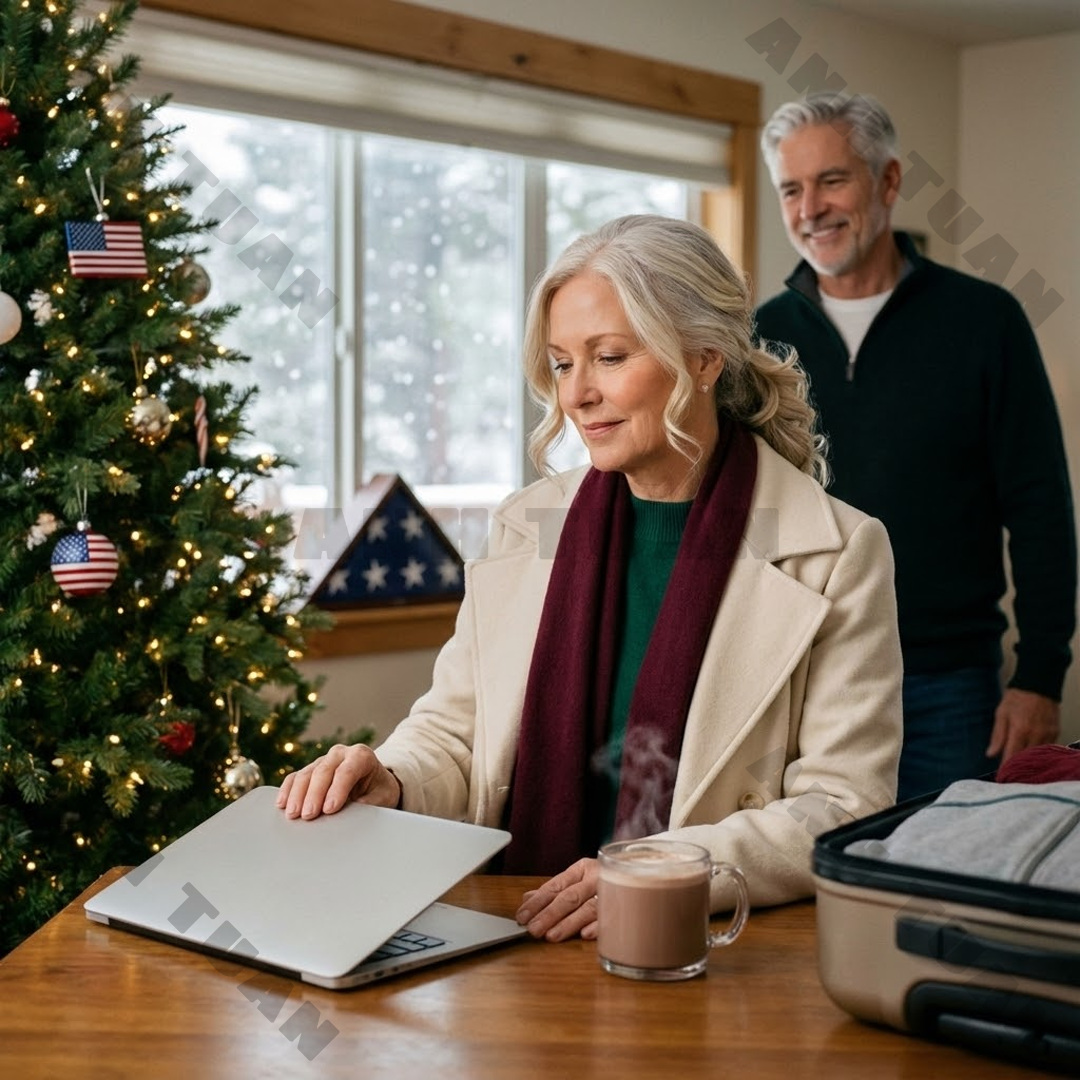
I didn’t argue. I didn’t ask why. I didn’t reach for the familiar rope I’d spent years tugging, the one that always led to me apologizing for wanting to belong.
I gave her the calmest smile I could manage, the one mothers learn when they’re trying to keep their hurt from becoming their child’s burden.
“That sounds nice,” I said. “I hope your mom has a wonderful day.”
Hannah’s shoulders loosened, just a fraction. Relief. Not guilt. Relief, like she’d been bracing for me to make it difficult.
“Great,” she said quickly. “Mark will drop off your gift later.”
My gift. Singular. Like I was being handled, not included.
She turned toward the porch without waiting for a response. Her boots tapped twice on the wooden steps, and then the cold rushed in as she pulled the door shut behind her.
I stood there with my hands on the back of a chair, staring at the place where she’d been. Snow fell in clean, light flakes outside the window, and in my neighborhood outside Colorado Springs, snow had a way of making everything look quiet and innocent. Pain didn’t care about snow, though. Pain could sit in a warm kitchen with a decorated tree and still feel like it was winter in your chest.
My name is Linda Dawson. I’m sixty-seven years old, and I live alone in the small house my husband and I bought forty years ago, when our son was still small enough to fall asleep in the back seat with his mouth open, his cheeks pink from the cold. The house is modest, but it’s mine, with creaky floors and a kitchen window that sticks when the temperature drops. The porch light flickers if the wind blows too hard, and I’ve learned to jiggle the switch twice to make it behave.
The walls are lined with photographs in mismatched frames because I never cared about matching. I cared about remembering. Paul used to tease me about it, passing through the living room with a grin like he was proud of how sentimental I was.
“You’ve got the whole family staring at us from every angle,” he’d say.
“And you still act like you don’t know how lucky you are,” I’d reply, and he’d laugh like it was the best compliment in the world.
Paul has been gone eight years now. Some days that number feels like a fact. Other days it feels like a wound that never learned how to close.
He died in the spring, when the trees were just starting to bud, and I remember the hospital room more clearly than I want to. The thin blanket over his legs. The beep of machines that made everything feel like a metronome counting down. The way his hand felt too light in mine, like the weight of him had already started leaving.
He looked at me and tried to smile through the effort.
“You’ll be okay,” he whispered, as if he could make it true by saying it.
I said, “I don’t want to be okay without you,” but my voice came out steady because that’s what forty years with a man like Paul does to you. It teaches you how to be brave even when you don’t feel brave.
After Paul, my world narrowed. It became my son, Mark, and my grandchildren, and the routines that kept me from falling into the kind of quiet that can swallow a person whole.
Mark is forty now, tall like his father, with hazel eyes that can look warm even when he’s exhausted. When he was a boy, he used to get so excited about Christmas that he’d wake up before sunrise and sit at the top of the stairs, waiting for permission to come down.
“Is it time yet?” he’d whisper, like Christmas was something that would break if he spoke too loudly.
Paul would pretend to groan. “Kid, even Santa needs a minute.”
And Mark would giggle into his hands, trying to contain his joy.
Those are the memories that still hit me the hardest, not because they’re sad, but because they remind me of how certain I once was that love meant permanence. That if you poured everything you had into your child, you could trust he’d remember where he came from.
Mark married Hannah six years ago.
Hannah is polished in a way I’ve never been. She’s the kind of woman who looks like she was raised in houses where no one left dishes in the sink and no one cried in front of company. Her voice is always measured. Her smile always arrives on time. She doesn’t shout. She doesn’t slam doors.
She doesn’t have to.
In the beginning, I worked hard to make her feel welcome. I brought her homemade soup the first time she got sick. I offered to watch the kids when she went back to work. I complimented her house, her taste, her holiday decorations, even when everything looked a little too perfect, like a showroom with children living in it.
I told myself kindness would build a bridge. I told myself if I stayed generous, there wouldn’t be room for resentment.
For a while, it seemed to work.
Every Christmas, I’d go to Mark and Hannah’s place with my pecan pie wrapped in foil, gifts stacked carefully in the trunk, and a bag of extra tape because Hannah always forgot she needed more. I’d help with the last-minute details. I’d hold the baby while Hannah fixed her hair. I’d let the kids smear frosting on my sleeve when they helped decorate cookies.
It wasn’t perfect, but it was family, and family has always been the thing I clung to, especially after Paul.
Then, slowly, something shifted.
It wasn’t one big moment. It was a pattern of small ones that I kept excusing because it felt safer to believe I was imagining it. Hannah started making plans without asking me first. Mark started calling less, and when he did, his voice had that rushed edge, like he was squeezing me into the cracks of his day.
The kids still ran to me when I visited, but Hannah would watch the clock the way people watch something they want to end. She’d say things like, “We’ve got an early morning,” even when I knew they didn’t. She’d stand up and start clearing plates before anyone had finished eating, the way you do when you want the room to empty without having to say so out loud.
I told myself, They’re busy. The kids are growing. Hannah’s overwhelmed. Don’t be needy, Linda.
But there’s a difference between not being needy and not being valued. And if I’m honest, I’d been training myself for years to accept crumbs with gratitude.
After Hannah left my porch, I made tea and sat at my kitchen table. The table is old, scratched, and solid. Mark used to do homework there, chewing his pencil like it had answers. Paul used to read the newspaper there with his coffee and fold it into neat squares like he respected it. I used to pack lunches there, slipping little notes into Mark’s sandwich bag, even when he pretended he didn’t care.
I stared at the steam rising from my mug and listened to the clock tick above the stove. I hadn’t cried yet, and that worried me more than tears would have.
My phone buzzed.
A text from Mark.
Hey Mom. Hannah said she talked to you about Christmas. I hope you’re okay with it. It’s just easier this year. Love you.
Easier. That word again, like comfort was a puzzle and the solution was to remove me.
I stared at the message until the screen dimmed.
For a moment, I pictured Mark at Hannah’s mother’s house, sitting at a table that wasn’t mine, laughing in a room I wasn’t invited into. I pictured Hannah’s mother, Carol, whose house smelled like store-bought candles and whose countertops never had anything on them except a decorative bowl of lemons nobody ate.
I pictured my grandchildren opening gifts, their cheeks rosy, their hands sticky with candy canes.
Then I pictured my own living room on Christmas morning, quiet except for the hum of the heater, my tree blinking in a house that would feel too big for one person.
Something in my chest tightened, not anger exactly, but the feeling of a door closing.
That night, I moved through my routines the way I always did, but everything felt different. I wrapped neighbor gifts I’d already bought, small tins of cookies and a scarf for Mrs. Ortega next door, who always brought me tamales in December and called me “mija” even though we weren’t related.
I watered my poinsettia and picked up the stray pine needles that fell from the tree. I tried turning on the television, but every channel seemed to be showing families reuniting, laughing, clinking glasses in warm rooms. The kind of scenes that look comforting until you’re sitting alone and realize they can also feel like a spotlight on what you don’t have.
I turned it off.
Instead, I went upstairs and opened the closet where I keep things I can’t bring myself to throw away. On the top shelf, behind a box of old Christmas cards and a pair of snow boots Paul used to wear, sat a suitcase.
It was dusty, with scuffed corners and a stubborn zipper that always caught. Paul and I used it when we took our one big trip to Europe years ago, back when Mark was a teenager and we’d saved for three years to afford something that felt extravagant.
I pulled it down and set it on the bed. When I opened it, I didn’t find clothes, of course. I found memories.
In the side pocket was Paul’s travel journal. His handwriting, slightly slanted, confident and playful, filled the pages. I flipped to a random entry and my throat tightened before I even finished reading.
Vienna. Linda laughed so hard at the street musician she cried. She wiped her tears like she was embarrassed. I told her never apologize for joy.
I pressed my fingers against the paper as if I could reach through it. Paul used to say the world was bigger than our worries. He used to say, “Life doesn’t end when people disappoint you, Linda. It just gets louder about what matters.”
That night, lying in my bed, I heard his voice in my head with startling clarity.
You always take care of everyone else. When will you do something for yourself?
The question didn’t feel accusing. It felt like an invitation.
The next morning, I brewed coffee and sat at my kitchen table with my laptop open. Snow fell lightly outside, coating the world in a clean layer that made everything look new.
I told myself I was just browsing. Just seeing what was out there. Just letting my mind go somewhere other than the ache of Hannah’s words.
I typed in Christmas travel packages.
Images filled the screen: bright markets, glowing lights, people wrapped in scarves holding mugs of something steaming, smiling in a way that didn’t look forced. One listing caught my eye.
A holiday tour through Germany, Austria, and Switzerland.
Departure in three days.
My heart beat a little faster, and my first instinct was to close the laptop. To tell myself I was being ridiculous. To return to the familiar role of staying put, staying quiet, staying grateful for whatever scraps of inclusion I was offered.
But then I thought of Hannah’s sentence again.
You can stay home.
The way she’d said it made my jaw tighten, not because I wanted revenge, but because I suddenly hated the idea of obeying.
I stared at the departure date. Three days. That was barely enough time to pack, to arrange someone to check the house, to wrap my mind around the fact that I might actually do it.
My hands hovered over the keyboard.
I thought about my life for the past eight years, the way my days had been built around being available. The way I’d waited for calls, invitations, updates, anything that made me feel like I still mattered. I thought about Paul’s journal, the way he’d written about joy like it was something worth defending.
If I stay here, I will spend Christmas proving I can survive being excluded, I thought. If I go, I will spend it proving my life is still mine.
I clicked.
The booking page opened. My name. My passport number. Emergency contact.
I hesitated at the emergency contact because, for years, that would have been Paul without a second thought. I typed Mark’s name anyway, feeling a sharp little irony in my chest.
Then I entered my card number.
My hands shook slightly as I pressed confirm.
The confirmation email popped up.
Trip confirmed.
For a moment, I just sat there, staring at the screen. Then I laughed, out loud, a small, startled laugh that sounded like it belonged to someone braver than me.
Mabel, my cat, lifted her head from the chair and blinked slowly like I’d interrupted her dignity.
“I know,” I told her softly. “I know. It’s a little crazy.”
But it didn’t feel crazy. It felt like oxygen.
The next two days were a blur of preparation that made time feel sharp and bright. I pulled sweaters out of drawers, scarves from the back of my closet, my sturdy walking shoes from the mudroom. I laid everything on the bed and made piles like I was building a new life out of fabric.
I found the small gold locket Paul gave me on our twentieth anniversary and held it in my palm for a long time. It still had his initials engraved on the back. I slipped it into my travel bag, not because I needed it, but because it made me feel like I wasn’t leaving him behind.
I called Mrs. Ortega and asked if her grandson could keep an eye on the house.
“He’s a good boy,” she promised. “He’ll shovel your walk too. He likes to feel important.”
I thanked her and felt my chest warm at the normal kindness of someone who didn’t need a reason to include me.
I didn’t tell Mark.
Not out of spite. Not because I wanted to punish him. Because I wanted one decision that belonged only to me.
On the night before my flight, Mark called.
“Mom,” he said, and I could hear the guilt in his voice. “Just checking in. You okay?”
“I’m fine,” I said, leaning against the kitchen counter.
He exhaled. “I hate that you’ll be alone on Christmas.”
I almost laughed, not because it was funny, but because it was so late and so easy to say words that changed nothing.
“It’s alright,” I told him calmly. “Sometimes quiet is good.”
There was a pause. “Hannah says it’s just easier this year.”
“That word,” I said softly before I could stop myself. “Easier.”
“Mom,” Mark warned, gentle but tired.
“I’m not trying to make you feel bad,” I said, smoothing my voice the way I’ve smoothed things for him his whole life. “I just want you to think about what ‘easier’ costs.”
Mark didn’t answer right away.
When he did, his voice was quieter. “I love you.”
“I love you too,” I said. “Tell the kids I love them.”
After I hung up, I stood in the kitchen for a long time, listening to the house settle. The heater kicked on. The refrigerator hummed. The clock ticked.
I didn’t feel frantic. I didn’t feel rage. I felt resolved.
In the early morning before sunrise, I loaded my suitcase into my car. The cold bit at my cheeks, sharp and clean. My breath came out in white puffs as I locked the front door and stood on the porch for a moment.
Through the window, my Christmas tree glowed softly, lights blinking in the quiet living room like it was waiting for someone. I touched the doorframe, a habit I didn’t even realize I had until Paul was gone, and whispered, “See you soon.”
Then I got in the car and drove toward Denver International Airport, the highway dark, the snow pushed into neat ridges along the shoulder by plows that had been out before dawn. The radio murmured softly, and every now and then a truck passed me, its headlights sweeping over the road like a slow-moving spotlight.
The airport was crowded with holiday travelers: families carrying pillows and snacks, couples in matching jackets, kids dragging stuffed animals that looked half-asleep. I noticed the huge American flag hanging in the concourse, rippling slightly when the doors opened and cold air rushed in. I noticed a soldier in uniform hugging an older woman who clung to him like she didn’t trust time.
For a split second, I felt that familiar ache, the instinct to compare my life to theirs. Then I lifted my chin and kept walking.
I wasn’t lost. I was leaving.
At security, I fumbled with my boarding pass because my fingers were cold and my hands were still trembling with the reality of what I’d done. A TSA agent with tired eyes and a voice gentler than I expected said, “Take your time, ma’am.”
I smiled. “Thank you.”
On the other side, I found my gate and sat down, watching the steady parade of people. My phone buzzed in my purse, and I didn’t look. I didn’t want anything pulling me back into the role of explaining myself.
When boarding started, I stood and joined the line. My heart beat steadily, strong in my chest.
On the plane, I found my seat and tucked my bag under the chair in front of me. The cabin smelled like recycled air and perfume and coffee. People shuffled into rows, stowing luggage, asking each other to switch seats.
A man sat down beside me. Tall. Silver hair. Clean coat. Kind eyes that looked like they’d seen real life and didn’t feel the need to pretend otherwise.
He gave me a polite smile.
“Holiday travel,” he said, like it was a shared joke.
“It certainly is,” I replied.
He glanced at the book in his hands, then back at me.
“Heading home,” he asked, “or heading out?”
I surprised myself by answering honestly.
“Heading somewhere new,” I said.
His smile warmed, the corners of his eyes creasing. “Good answer.”
He held out his hand. “David Monroe.”
I shook it. “Linda Dawson.”
He repeated my name softly like it mattered. “Linda.”
The plane taxied. The engine’s rumble rose under our feet, deep and steady. The city lights beyond the window looked like scattered jewelry on black velvet.
David leaned back, then turned his head toward me again.
“First time doing something like this?” he asked.
I hesitated. Then nodded. “First time alone, yes.”
His expression didn’t shift into pity. It stayed calm, curious. “How does it feel?”
I stared out at the runway lights, bright lines guiding us forward.
“It feels,” I said slowly, “like I waited too long.”
David nodded once like he understood. “Most people do,” he said. “But you’re here now.”
The plane lifted off. My stomach fluttered, not just from the motion, but from the simple truth of leaving. Leaving the expectation. Leaving the quiet humiliation. Leaving the habit of shrinking.
We talked in pieces across the flight. Where he’d taught. How long he’d been retired. The strange way grief changes your sense of time. The way winter can make people nostalgic enough to tell the truth.
When I mentioned Paul, I expected the usual awkward sympathy, the rushed sentence people offer so they can move on. Instead, David nodded slowly.
“My wife died three years ago,” he said. “At first, the quiet in my house felt like it was trying to swallow me. Turns out it was just teaching me what matters.”
His words settled in my chest in a way that felt steady, not heavy.
After a while, the cabin lights dimmed. People slept with blankets tucked around their shoulders. Somewhere behind us, a baby cried and then quieted, soothed by a tired parent.
David turned toward me again, his voice low enough that it felt private.
“Do you feel guilty?” he asked gently.
The question startled me because it was the exact word circling inside me like a restless bird.
“Yes,” I admitted. “And I hate that I do.”
David didn’t argue with it. He didn’t try to talk me out of my feelings. He simply nodded, as if guilt was a language he’d learned too.
“Guilt shows up when you’re used to sacrificing,” he said. “It tries to convince you you’re selfish for choosing yourself.”
I looked at him, and a small, unexpected laugh slipped out. “Are you a professor of guilt, too?”
His smile flickered. “Retired, thankfully.”
I laughed again, quieter this time, and the sound felt good, like stretching a muscle I’d forgotten I had.
When we landed for our connection, we walked through the terminal with the slow steady rhythm of people who weren’t trying to impress anyone. David kept pace beside me without hovering. He didn’t rush me, didn’t leave me behind.
At one point, I paused to adjust my scarf and he waited, hands in his coat pockets, gaze scanning the crowd like he was simply present, not impatient. It struck me then how rare that felt, not being managed, not being tolerated, just being beside someone.
We boarded the next flight and hours blurred into seatbelt signs and lukewarm coffee and the quiet hum of the plane cutting through the sky.
When we finally arrived in Munich, the cold hit my face the moment we stepped outside the airport doors. The air smelled sharp and clean, like snow and stone and something faintly sweet from a nearby bakery. Holiday lights were strung across a street near the terminal, small stars glowing softly against the gray winter sky.
Our tour guide gathered us near a bus with a cheerful voice and a sign held high. The group clustered together, strangers with matching luggage tags, blinking at the new world around us.
David stood beside me, close enough that I could feel the steady warmth of his presence without it being intrusive.
My phone buzzed in my purse.
I didn’t look.
I lifted my face into the cold air and let it fill my lungs.
Somewhere back home, Hannah was probably setting a table I wasn’t invited to. Mark was probably carrying gifts into a house that wasn’t mine. My grandchildren were probably laughing, not understanding the choices adults make.
And here I was, in a foreign city, with my suitcase rolling behind me and the weight of my old life loosening with every step.
Hannah told me I could stay home because she thought I had nowhere else to go. But standing there under that winter sky, watching the lights glow over a street I’d never walked before, I felt something straighten in my spine.
I had the whole world waiting for me.
And for once, I wasn’t asking anyone’s permission to step into it.
The hotel in Munich smelled like polished wood and warm bread. The lobby glowed with a tall tree decorated in gold ornaments that caught the light and made it look like the room had its own quiet stars. A bellhop rolled my suitcase across the marble floor, and I caught myself wanting to apologize for needing help, a reflex that surprised me.
In my room, I set my bag down and stood by the window, looking out at the street below. Snow dusted the rooftops, and people moved briskly in scarves and knit hats, their breath visible in the cold. Somewhere in the distance, a church bell rang, deep and slow, and the sound threaded through the evening like it belonged there.
I hung my coat on a hook, then sat on the edge of the bed and finally checked my phone.
Two missed calls from Mark. One text.
Mom, call me when you get this.
No context. No warmth. Just urgency, like I’d broken a rule he assumed I still lived by.
I stared at the screen, then placed the phone face down on the nightstand.
Not tonight, I thought. Tonight I get to be a person, not a problem to solve.
Downstairs, the tour group gathered for a welcome dinner. There were about twenty of us, mostly retirees, couples and a few solo travelers who looked like they’d decided life was too short to wait for other people to catch up. The guide introduced herself as Petra and spoke in cheerful, crisp English with a German accent that made even the schedule sound charming.
David sat across from me at the long table. There was a candle between us, and when it flickered, the light caught in his eyes. He looked relaxed, comfortable in a room full of strangers, like he’d learned how to be at ease in his own skin.
Petra raised a glass and welcomed us, and people clinked glasses like they were celebrating the idea of being alive in a new place. I found myself smiling, truly smiling, before I even realized I’d done it.
David leaned slightly forward.
“So,” he said quietly, “what made you choose this trip?”
I could’ve given him a polite answer. I could’ve said I just wanted a change of scenery, or I’d always dreamed of Christmas markets, or I found a good deal and felt impulsive.
Instead, I looked at the candle and said, “Someone told me I could stay home.”
David’s expression didn’t change, but his attention sharpened, like he’d just heard the real story behind the story.
“And you decided,” he said gently, “that home isn’t a punishment.”
I let out a breath I didn’t realize I’d been holding.
“Yes,” I said. “Exactly.”
After dinner, Petra suggested a short walk to a nearby Christmas market. Outside, the cold hit my cheeks, and my boots crunched over snow that had been packed down by hundreds of footsteps. The market glowed in the distance, strings of lights draped between wooden stalls. The air smelled like roasted nuts and spice, and something warm and sweet I couldn’t identify at first.
Glühwein, someone said behind me, laughing. Mulled wine.
Music drifted through the stalls, soft and cheerful, and for the first time in weeks I didn’t feel like my joy needed permission.
David walked beside me without crowding me. When we stopped at a stall selling ornaments, he picked up a small wooden bird painted red and gold and held it between his fingers.
“This one looks like it has opinions,” he said.
I laughed, surprised by how natural it sounded. “Maybe it does,” I replied. “Maybe it’s judging us.”
He smiled. “Let it. We’ll survive.”
We wandered slowly, weaving through the crowd. Couples held hands. Children tugged their parents toward gingerbread. An older woman in a bright scarf stood at a stall and sang softly to herself, as if she couldn’t help it.
I bought a small ornament shaped like a snowflake, delicate and simple. I held it in my palm and imagined hanging it on my tree next year, a quiet reminder that my life didn’t end when someone forgot to include me.
At the edge of the market, Petra gathered us near a fountain wrapped in lights.
“We will have an early start tomorrow,” she announced. “Breakfast at seven. Bus at eight. Wear comfortable shoes. Munich is beautiful, but she makes you earn her.”
People chuckled. The group began to disperse, and for a moment I stood still, watching the lights shimmer against the snow.
David paused beside me. “You okay?” he asked.
I nodded. “I didn’t realize how tired I was,” I said quietly. “Not physically. Just… tired.”
David’s gaze softened. “Being excluded is exhausting,” he said. “It makes you work harder just to feel normal.”
The words landed in me like truth.
Back in my room, I hung my scarf and washed my face, then stood in front of the mirror. The woman looking back at me didn’t look dramatic. She didn’t look like a heroine. She looked like a sixty-seven-year-old woman with tired eyes and a steady mouth.
But there was something else there, too.
A faint spark.
I turned off the light and climbed into bed. Outside the window, the city hummed quietly, and snow fell in soft sheets. I fell asleep faster than I expected, the kind of sleep that comes when your body finally believes you’re safe.
In the morning, I woke to pale winter light and the distant sound of traffic. For a moment, I forgot where I was. Then I remembered, and a smile tugged at my mouth before I could stop it.
Downstairs at breakfast, the dining room smelled like coffee and fresh bread. I sat with two women from the tour, Carol from Ohio and Denise from Seattle, both widows, both sharp and funny in a way that made me feel instantly less alone.
Carol leaned toward me. “So what’s your story?” she asked, buttering a roll with decisive confidence.
I hesitated, then shrugged lightly. “I decided to stop waiting,” I said.
Denise smiled. “Good,” she replied. “Waiting is the quietest way people lose years.”
On the bus, we rolled through streets lined with old buildings and modern cars, through neighborhoods that looked like postcards, and as Petra spoke about Munich’s history, I watched people on the sidewalks carrying groceries, walking dogs, living ordinary lives under holiday lights.
David sat a few rows ahead. Every now and then he turned to glance back at me, not in a way that made me feel watched, but in a way that made me feel remembered.
By the time we reached Salzburg, the world looked like it had been dusted with powdered sugar. The rooftops were white, the streets narrow and charming, and the mountains in the distance rose like a quiet promise.
We walked through a market tucked into a square. A choir sang nearby, their voices rising into the cold air, and the sound made my chest ache in a way that wasn’t pain, exactly. It was longing, yes, but also something like gratitude.
My phone buzzed again.
This time, I checked it.
Another text from Mark.
Mom, please answer. Are you okay?
I stared at the words and felt something shift. Not anger. Not triumph. Just clarity.
He wasn’t worried about me because he’d missed me. He was worried because I’d become unpredictable. Because I’d stepped out of the role he counted on me to play.
I could have soothed him. I could have typed, I’m fine, sweetheart, don’t worry, I’m just home with a book.
Instead, I lifted my phone and took a picture of the square, the lights strung between buildings, the snow soft on the rooftops, the market glowing like warmth you could walk into.
I sent it to him.
Merry Christmas from Salzburg. I’m having a beautiful time.
Three dots appeared almost immediately, then disappeared, then appeared again.
Finally, his reply came through.
What? Where are you?
I watched the message sit on my screen and felt my mouth curve into a small smile.
Exactly, I thought. Where I am is finally my choice.
That afternoon, David found me near a stall selling handmade candles. He held out two paper cups, steam rising from both.
“Hot chocolate,” he said. “I figured it might improve your view of humanity.”
I took one and wrapped my hands around it. “Thank you,” I said, and I meant it.
We sat on a bench near the edge of the market, watching people drift past. Snow fell in slow, gentle flakes. The chocolate warmed my palms, and the quiet companionship beside me felt like something I hadn’t realized I’d been starving for.
David looked ahead as he spoke, like he wasn’t trying to make the moment heavy.
“Do you ever miss him most in the ordinary moments?” he asked.
I knew exactly who he meant.
“Yes,” I said softly. “I miss Paul when I reach for something on the top shelf and forget there’s no one to ask. I miss him when the first snow falls, because he used to stand at the window and say, ‘Look at that, Linda. The world’s trying to start over.’ I miss him when I hear a stupid joke and there’s no one to groan at it with me.”
David nodded slowly. “That’s the hardest part,” he said. “The world doesn’t stop. It just… removes someone, and then expects you to keep walking like you didn’t notice.”
I swallowed against the tightness in my throat. “And you?” I asked. “What do you miss?”
David’s smile was faint. “I miss the way my wife used to correct my posture when I was reading,” he said. “She’d come behind me and press her hand between my shoulders like she could straighten me from the inside out. I miss her laugh. It was quiet, but it always made the room feel bigger.”
We sat in silence for a while, not awkward, just real.
When the choir began to sing again, the song floated over the square, soft and familiar. David’s hand brushed mine by accident, and neither of us pulled away immediately.
That night, back at the hotel, I posted one photo online. Nothing dramatic, nothing staged. Just a picture of me and David standing near a Christmas tree in the market, both of us laughing because Carol from Ohio had taken the photo and managed to cut off the top of David’s head.
Sometimes the best company is found when you stop waiting for an invitation, I wrote.
I didn’t expect much. I assumed a few friends would “like” it, maybe a neighbor would comment something sweet, and that would be the end of it.
Within minutes, my phone began lighting up like a slot machine.
Old coworkers. Church friends. Neighbors. People I hadn’t heard from in years.
You look so happy, Linda.
Good for you.
I love this for you.
And then, the messages from my family.
Mark: Mom, where are you? Who is that man?
Mark: Please call me.
Hannah: Wow. I didn’t realize you were traveling. You look… different.
Hannah: Is that someone special?
I stared at the screen until the words blurred slightly, not because I was crying, but because I suddenly felt the sharp truth of it.
For years, I’d been available, predictable, quietly waiting. They hadn’t worried about me then. They hadn’t rushed to check on me then. They hadn’t cared enough to notice my loneliness while it was happening.
But the moment I looked happy without them, the moment someone else sat beside me in a photo, the moment I stopped waiting, they noticed.
Not because they suddenly understood love.
Because they suddenly felt control slipping.
I set my phone down and went to the window. Outside, the city lights glowed over the snow. Somewhere below, people laughed, their voices faint but alive. I placed my palm against the cold glass and let myself breathe.
I wasn’t the same woman who had stood on her porch and swallowed her hurt.
And that was the point.
I stayed at the window until the cold seeped through the glass and into my palm. Somewhere below, a couple walked fast across the square, shoulders tucked close together, their laughter puffing out in little clouds. A taxi rolled by with soft tires over packed snow. The whole city looked like it had decided to glow on purpose.
I didn’t answer Mark. I didn’t answer Hannah. I didn’t even feel the old rush to smooth it all over.
I climbed into bed and let the darkness hold me. For the first time in a long time, I wasn’t bracing for the next disappointment. I was simply resting inside my own choice.
In the morning, church bells drifted through the air like a slow reminder that the day would happen whether I was ready or not. Pale winter light spilled across the floor of my room, and for a moment I lay still, listening to the quiet hum of heat coming through the vents. My body felt strangely light, as if it had stopped carrying something heavy overnight.
Then I remembered the messages.
I reached for my phone and turned it over.
The screen lit up with a stack of notifications that made my eyebrows rise. Not just Mark and Hannah, but cousins, old friends, women I used to work with at the grocery store back in Colorado, neighbors from my street, even a former PTA mom from Mark’s elementary school. People were tagging each other under my photo, leaving little comments that weren’t dramatic, just surprised.
Look at Linda go.
She looks radiant.
This is the happiest I’ve seen her in years.
I scrolled until I found Mark’s messages again.
Mom, where are you? Who is that man?
Please call me.
Are you okay?
I stared at the words and felt something settle inside me. It wasn’t spite. It was the simple realization that his concern arrived only once I stopped behaving like a fixed object in his life.
I set the phone down and sat on the edge of the bed. Outside, the snow on the rooftops looked untouched, smooth as frosting. The world didn’t look like a place where people got excluded. It looked like a place where anything could begin.
Downstairs, the dining room was warm and bright. The tour group had gathered around a long table with coffee cups and plates of bread, and Petra stood near the tree in the corner with a small basket in her hands.
“Merry Christmas,” she said, beaming. “We do a small exchange. Nothing big. Just something symbolic. Something that says, ‘I see you.’”
That last phrase landed in me like a soft tap against a bruise.
People reached into bags and pockets, pulling out little packages and envelopes. Denise from Seattle handed Carol from Ohio a pair of fuzzy socks with snowmen on them. Carol squealed like she’d won a prize. Someone gave Petra a small tin of cookies they’d bought at the market. Petra pretended to clutch her heart like it was too sweet.
David sat across from me, his coffee steaming in front of him. He watched the room with a calm expression, like he wasn’t afraid of tenderness.
When Petra reached him, she handed him a small package with a ribbon. He opened it and laughed softly.
“A tiny notebook,” he said, turning it over in his hands. “Perfect.”
Petra winked. “For your professor thoughts.”
He smiled, and the expression made him look younger, not in a shallow way, but in the way kindness can loosen a person’s face.
Then Petra moved toward me and placed a small wrapped box in front of me. It was light, carefully wrapped, with a piece of evergreen tucked under the ribbon.
I looked up, confused.
David nodded once. “Open it,” he said quietly.
My fingers were a little clumsy, but the paper came away, and inside was a snow globe. Small, delicate, with a tiny wooden house inside and two little figures sitting beside a Christmas tree. When I shook it gently, the flakes swirled like a private storm.
For a second my chest tightened so hard I couldn’t speak.
“It reminded me of your… warmth,” David said, clearing his throat as if he didn’t want to make a big thing of it. “A home doesn’t have to be a building. Sometimes it’s a person.”
I blinked fast, the way you do when you’re trying not to cry in public.
“It’s beautiful,” I managed. “Thank you.”
David’s eyes held mine, steady and quiet. “You’re welcome, Linda.”
The group moved on, laughter and little thank-yous filling the room. I held the snow globe carefully and felt something shift. Not because of the object, but because someone had offered me something without asking me to earn it first.
After breakfast, Petra led us through the old streets toward the river. Salzburg looked like it had been painted for a holiday postcard, the mountains rising in the distance, the buildings neat and pale against the snow. People walked with shopping bags, scarves wrapped high, cheeks pink from cold. A street musician played softly under an awning, the melody familiar enough to ache.
We stopped at a small café for lunch. The windows fogged with warmth and the smell of butter and bread. I sat beside David with my soup and a mug of coffee I didn’t need but wanted anyway.
A few tables away, an American family was talking too loudly, the father complaining about jet lag and the kids whining about the cold. The mother kept shushing them with that tight smile women wear when they’re trying not to lose it in public.
It should’ve irritated me. Instead, it made me feel oddly tender. It was messy. It was imperfect. It was family. And for years, I would’ve given anything just to be included in that kind of chaos.
David watched me glance over and then back down at my food.
“You’re thinking about home,” he said.
I didn’t deny it. “I’m thinking about how easy it is to get pushed to the edge,” I said quietly. “How quickly people start acting like you’re optional.”
David stirred his coffee slowly. “People tend to categorize,” he said. “When you’re useful, you’re essential. When you’re inconvenient, they rewrite the story so they can keep their image intact.”
I looked at him. “That’s a polite way of saying people can be selfish.”
He smiled faintly. “That too.”
After lunch, we walked along the river, the water dark and moving under the ice. The air smelled like cold stone and smoke from chimneys. David stayed at my pace, and that small courtesy felt like more than courtesy.
When the group stopped for photos near a bridge wrapped in lights, Denise nudged me gently.
“Your phone still going wild?” she asked.
I laughed once, quiet. “It is.”
Denise’s eyes narrowed in amused suspicion. “Let me guess. Family only noticed you exist the moment you posted proof you were living.”
I stared at her, surprised by how accurately she’d named it.
Denise shrugged like it was common sense. “Honey, I’ve been divorced twice. People don’t miss your presence until they miss your function.”
That night, back at the hotel, I finally picked up my phone again. The messages were still there. Mark had sent three more. Hannah had sent another, longer this time.
Linda, we didn’t realize you would do something like this without telling us. Mark is really worried. The kids are confused. Please call us.
Do something like this. As if living was a stunt.
I stared at the screen until my jaw tightened. Then I set the phone down and took a shower, letting the hot water pound my shoulders and rinse away the day. When I got out, the mirror was fogged. I wiped a small circle with my palm and looked at my face.
I didn’t look twenty-five. I didn’t look magically transformed. I looked like myself.
But my eyes looked clearer than they had in weeks.
I put on my pajamas and sat by the window with the snow globe in my hands. I shook it once and watched the flakes swirl.
Paul would’ve loved this, I thought. Not the drama of it, but the quiet defiance. The fact that I didn’t collapse. The fact that I didn’t beg.
My throat tightened at the thought of him. I missed him in a way that never really left, but tonight the missing didn’t feel like a hole. It felt like a thread connecting me to the part of my life that had been real and steady.
There was a soft knock at my door.
I froze for a second, then stood and opened it.
David stood in the hallway, coat on, scarf wrapped around his neck. He looked slightly unsure, like he was stepping into a moment that mattered and didn’t want to mishandle it.
“Sorry,” he said quietly. “I don’t want to intrude. I just… I wanted to check on you.”
I stepped back to let him in, surprised by how natural it felt.
He didn’t sit right away. He glanced at the snow globe on my nightstand and smiled faintly.
“You like it?”
“I do,” I said. “It feels…” I searched for the word. “It feels like being taken seriously.”
David nodded slowly, then finally sat in the chair near the window. For a moment, we were quiet, the kind of quiet that doesn’t need to be filled.
Then David spoke, his voice low.
“Linda,” he said, “I should tell you something.”
I turned toward him, my heart giving a small, cautious beat.
He rubbed his thumb over the edge of his scarf, a small nervous gesture. It made him look more human, less like the steady presence he’d been.
“I knew your name before the airport,” he said.
I blinked. “You did?”
He nodded. “When the tour list came through, I saw ‘Linda Dawson’ and… it stopped me.”
My pulse quickened. “Why?”
David exhaled, and the breath looked like relief and regret at the same time.
“My brother,” he said, “was in the Navy. His name was Steven Monroe. He had a close friend named Paul.”
The room felt suddenly smaller, like the air had changed.
I stared at him. “Paul Dawson,” I whispered, my voice barely there.
David nodded once. “Yes.”
For a moment, my mind went blank. Then memories hit in a rush. Paul in his younger years, the few Navy friends he kept in touch with, the stories he’d told over beer at the kitchen table. The way he used to speak about those years like they were a lifetime ago but still shaped him.
“I met you once,” David continued, carefully, like he didn’t want to push too fast. “At Steven’s house in Virginia. It was… decades ago. You probably wouldn’t remember. I was the younger brother visiting for a weekend. But I remember Paul talking about you afterward. He talked about you like you were the center of his world.”
My throat tightened so suddenly I had to look away.
“He was,” I whispered. “He was my whole world.”
David’s voice softened. “When I saw your name, I thought, it can’t be her. But then at the airport… I recognized your face. Not perfectly, but enough. And I recognized the way you stood. It sounds strange, but it was… familiar.”
I gave a shaky laugh that wasn’t really laughter. “My posture?”
David smiled faintly. “Something like that.”
I stared at the window, at the lights outside, at the snow falling quietly, and it felt like Paul had reached across time and tapped my shoulder.
David went on, gentle.
“I didn’t say anything because I didn’t want you to feel watched,” he said. “And because I didn’t know what your life looked like now. But when you told me you were heading somewhere new…” He paused. “I thought maybe Paul would want you to have a handrail. Someone who knew his name. Someone who would understand without you having to explain everything.”
I swallowed hard. “This feels like…” I shook my head. “It feels like a coincidence that’s too perfect.”
David’s gaze held mine. “Life can be oddly kind,” he said. “Not often. But sometimes.”
I couldn’t stop the tears then. They came silently, sliding down my cheeks. I didn’t sob. I didn’t collapse. I just let them fall because for the first time in a long time, the emotion didn’t feel like it needed to be hidden.
David didn’t reach for me dramatically. He just sat there, present, letting me have my feelings without trying to fix them.
When I finally wiped my face, I whispered, “Paul would’ve liked you.”
David’s smile trembled. “He was one of the best men Steven ever knew.”
The name Steven made something pinch in me too, because Paul had talked about him like a brother. I remembered Paul standing by the grill in our backyard in Colorado, flipping burgers while he told Mark stories about Steven and the time they got lost in a storm and laughed so hard they forgot to be scared.
“How is Steven?” I asked, already afraid of the answer.
David’s face softened into something quiet. “He’s gone,” he said gently. “Six years now.”
I closed my eyes, letting the grief ripple through me, old and new mixing together.
“I’m sorry,” I whispered.
David nodded. “Me too.”
We sat there for a long time, the two of us held in a strange circle of loss and connection. Outside, the world kept glowing, indifferent and beautiful.
Finally, David stood.
“I should let you sleep,” he said quietly.
I nodded. “Thank you for telling me,” I said. “I don’t know what it means, but… thank you.”
David hesitated at the door, then looked back at me.
“It means you’re not as alone as you think,” he said.
After he left, I sat in the dark and held the snow globe in my hands. I didn’t shake it. I just held it, feeling the cool glass under my fingers.
For years, Christmas had been something I endured, something I performed. This year, it had become something else entirely.
It had become a doorway.
The next day was Vienna.
The bus ride was long, but the landscape kept changing in ways that held my attention. Snow-covered fields, small villages with church steeples, evergreens dusted white. It reminded me of driving through the Rockies back home, those stretches of highway where the mountains feel like guardians and the sky looks close enough to touch.
When we arrived, Vienna looked like a dream someone had the good sense to keep understated. Grand buildings, wide streets, holiday lights draped elegantly rather than loudly. The air smelled like roasted chestnuts and coffee, and everywhere I looked there were people walking with purpose, as if winter was something to move through with grace.
That evening, our group had dinner in a small restaurant overlooking a street lined with lights. A violinist played somewhere near the corner, the notes soft and steady. Someone at another table laughed, and the sound filled the space without overwhelming it.
David raised his glass.
“To second chances,” he said.
I lifted mine. “To not waiting,” I replied.
He smiled, the expression warm and real. “To Linda,” he added, “who decided she still gets to be the main character.”
My cheeks warmed, and I shook my head, half embarrassed, half grateful.
Later, walking back to the hotel, snowflakes fell in slow swirls around us. The city felt hushed, wrapped in winter.
David spoke as we walked, his voice quiet.
“Are you going to call your son?” he asked.
I thought about Mark’s messages, Hannah’s tone, the way the word worried had been used like a leash.
“Yes,” I said slowly. “But not because I’m being summoned.”
David nodded once, approving without saying so.
Back in my room, I sat on the bed with my phone in my hand. The screen was full of missed calls now. Mark. Hannah. One unknown number that I guessed belonged to Hannah’s mother or maybe one of Hannah’s sisters.
I stared at Mark’s name.
My thumb hovered.
Then I pressed call.
He answered on the second ring, breathless.
“Mom? Oh my God. Where are you? Are you okay? Why didn’t you tell us?”
His words came fast, tangled with panic and frustration. I could hear voices in the background, the clatter of dishes, a television, children. A house full of life that I’d been told to stay away from.
I kept my voice calm. “Hi, sweetheart.”
“Mom,” he said again, sharper this time. “Where are you?”
“I’m in Vienna,” I said.
There was a pause so long I could almost picture him standing still, phone pressed to his ear, trying to fit my words into the version of me he’d kept in his mind.
“You’re… in Austria?” he finally said, like the country itself was unbelievable.
“Yes,” I replied. “I decided to travel.”
“But… it’s Christmas,” he said, as if that proved I should be sitting in my living room alone.
“Yes,” I said again, gentle but firm. “It is.”
Mark exhaled hard. “Mom, Hannah’s freaking out. The kids keep asking about you. We didn’t know you’d—”
“You didn’t ask,” I said softly.
Silence.
I didn’t say it cruelly. I didn’t need to. The truth didn’t require volume.
Mark’s voice dropped. “We thought you’d just… do what you always do.”
There it was. The real confession.
I closed my eyes for a moment. When I opened them, I could see the city lights outside my window, steady and distant.
“I did what I always do for a long time,” I said quietly. “I stayed available. I stayed polite. I stayed grateful. And I kept telling myself it was enough.”
Mark swallowed, audible through the phone. “Mom, I’m sorry.”
“I know,” I said. “And I love you. But loving you doesn’t mean I disappear when it’s convenient.”
His voice broke slightly. “Hannah didn’t mean it like that.”
“It’s not about what she meant,” I replied. “It’s about what she did. It’s about what you allowed.”
Mark didn’t speak for a moment, and in the background I heard a child’s voice ask, “Is that Grandma?”
My throat tightened.
“Yes,” Mark said toward the room, his voice strained. “It’s Grandma.”
A small voice shouted into the phone, excited and high.
“Grandma! Where are you?”
I smiled, real this time, tears prickling again for a different reason. “Hi, baby,” I said. “I’m far away, but I’m thinking about you.”
“Are you on a plane?” the child asked.
“I was,” I said softly. “Now I’m in a city with lights everywhere and snow on the rooftops.”
“Are there reindeer?” the child demanded, dead serious.
I laughed. “Not here,” I said. “But there are beautiful horses that pull carriages, and there are cookies the size of my hand.”
The child gasped like I’d offered magic.
Mark’s voice came back, quieter. “Mom… please don’t be mad.”
“I’m not mad,” I said honestly. “I’m awake.”
That word seemed to hit him harder than anger would have.
After we hung up, I set my phone down and sat in the quiet, letting the call settle in my chest. I hadn’t screamed. I hadn’t begged. I hadn’t been cruel.
I had simply been real.
Outside, Vienna kept shining.
And inside me, something kept unfolding, slow and steady, like a woman remembering she has her own life to live.
The next morning, we left for Switzerland, and the mountains rose ahead of us like a promise I didn’t know I’d needed.
News

“I Still Miss Him”: Dolly Parton Breaks Down Mid Song as Reba McEntire Joins Her for Heart Shattering Tribute to Late Husband Carl Dean.
“I Still Miss Him”: Dolly Parton Breaks Down Mid Song as Reba McEntire Joins Her for Heart Shattering Tribute to…

This guitar carried my soul on its strings when no one knew my name…
In the electric silence that follows a singer’s last note, when the world holds its breath in anticipation of what’s…

The Voice reveals 4 returning coaches for season 28 including Niall Horan and Reba McEntire
The duo will be joined by fellow show alums Michael Bublé and Snoop Dogg. Nial Horan and Reba McEntire on…

Reba McEntire: “Drag Queens Don’t Belong Around Our Kids”
Reba McEntire Sparks Controversy with Statement on Drag Queens and Children. Country music legend Reba McEntire has found herself at…

Reba, Miranda Lambert, & Lainey Wilson Debut Powerful New Song, “Trailblazer,” At The ACM Awards
“Trailblazer” Is A New Song That Celebrates The Influential Women Of Country Music’s Past And Present Reba McEntire, Miranda Lambert, and Lainey…

Jennifer Aniston made a surprise appearance with a dazed expression and an unresolved…
Jennifer Aniston is no stranger to the public eye. For decades, she’s been one of the most beloved faces in…
End of content
No more pages to load